SCM

Pages

Saturday, March 22, 2014

#Milan #day 2

We woke up quite early in the morning. But before we went out, we spent an hour recording a video! All of us took a role of a superhero and doing "trampoline" on the bed instead and rescue our boss - Esther!
Our first stop is the Branca Tower near to the Sfroza Castle.
Torre Branca is an iron panoramic tower located in Parco Sempione, the main city park of Milan, Italy.
However, again, it was under renovation when we arrived.
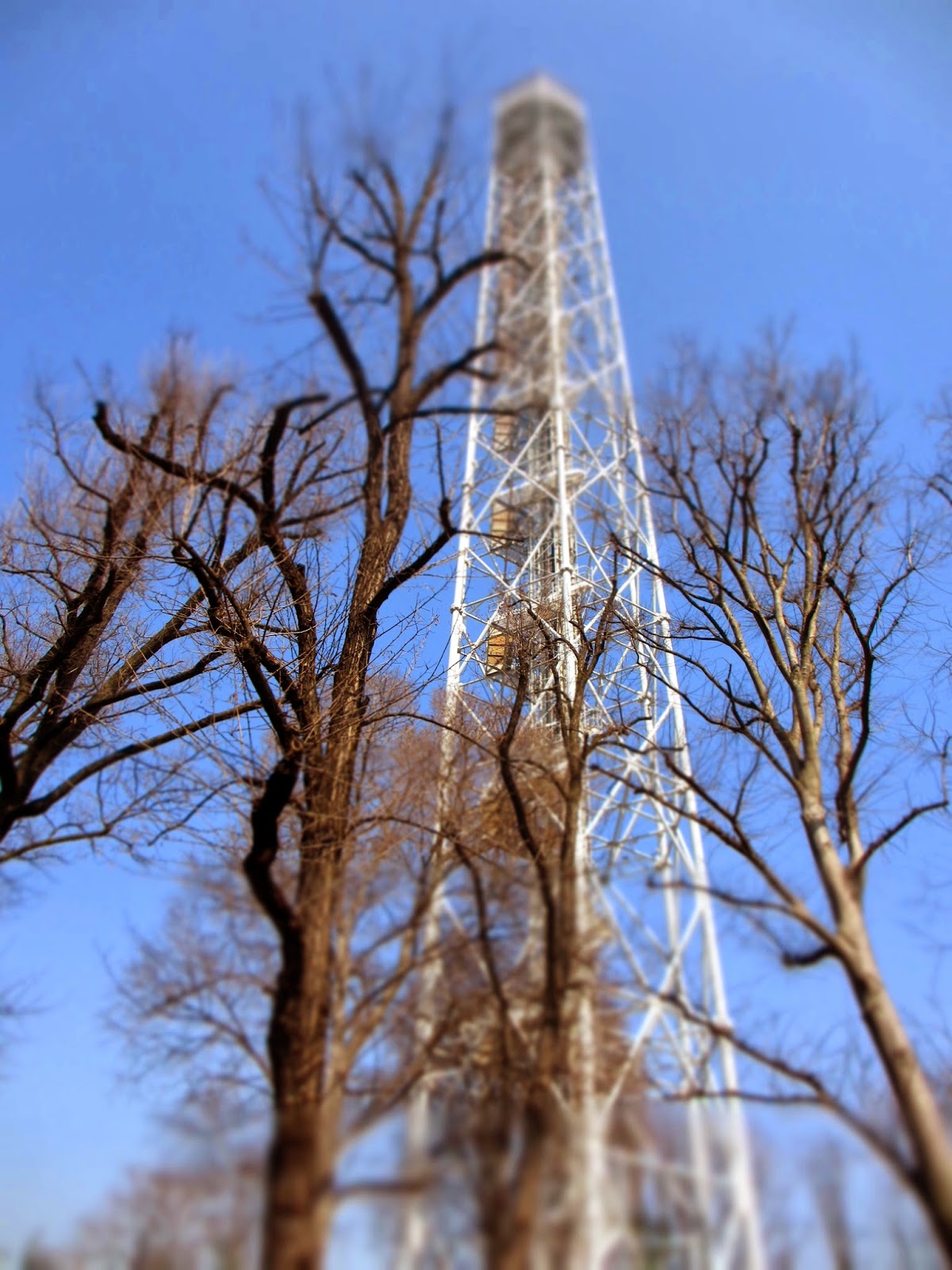
So, we went to Climitero Momumentale after this.
The Cimitero Monumentale is one of the two largest cemeteries in Milan, Italy.


The memorial of about 800 Milanese killed in Nazi concentration camps is located in the center.
The weather is so hot! I felt like I am back to Malaysia. But the thing is that I miss everything in Malysia, but not the weather!
Wow, epic of the day,the well-known must-see last supper painting by Leonardo Da Vinci in the Convent of Santa Maria delle Grazie in Milan, Italy.
It seemed like he did a lot of thinking of this painting beofre he drew. 
He began working on it in 1495, and finished "The Last Supper" in 1498. This is worth noting, as Leonardo was a known procrastinator with a marked tendency to leave projects unfinished.
"The Last Supper" is Leonardo's visual interpretation of an event chronicled in all four of the Gospels (books in the Christian New Testament). The evening before Christ was betrayed by one of his disciples, he gathered them together to eat, tell them he knew what was coming and wash their feet (a gesture symbolizing that all were equal under the eyes of the Lord). As they ate and drank together, Christ gave the disciples explicit instructions on how to eat and drink in the future, in remembrance of him. It was the first celebration of the Eucharist, a ritual still performed.
Specifically, "The Last Supper" depicts the next few seconds in this story after Christ dropped the bombshell that one disciple would betray him before sunrise, and all 12 reacted to the news with different degrees of horror, anger and shock.
Well, that' all for second day...

#Italy #Milan-#Day 1

We took the flight early in the morning at 7.30am and reached Milan / Linate at 11.00am.
Then, we  redeemed our Milano card in Milan Centrale.
Our princess, Ben left her bag with her passport inside in metro station. Everyone went crazy searching everywhere but luckily her prince, the security guard came along and said he found her bag!
The princess was sooo happy and she held his arm and said “I love you!”

Then, we headed to B&B Music hostel. Since we were quite late, we rather waited for Cindy and we went out together instead of the original plan to going to meet in front of the church.
Around 2.00pm, we went to Sforzesco Castle. It was partly destroyed. Well, I think it is famous maybe because Leonardo Da Vinci helped out in decoration work. 
Well, people are not all good! There are always black sheep that disgrace their own race. A lot of black people selling bracelet here. They approached you and said the bracelet is for free and bring you good luck!
However, they forced you to wear it and then only they asked for money!


Since we were quite late, we didnt go for Teotro Alla Scala which is a place where for lot of performances such as ballet, mask show, opera and on and on.
Then, we went to the Galleria Victtoria, which is the world's oldest shopping mall!Apparently, although there are nothing much inside, still, it is a place worth visiting!
The most interesting part is that on the ground of the central octagonal, there are four mosaics portraying the Coat of Arms of the three Capitals of the Kingdom of Italy (TurinFlorence and Rome) plus the Milan's. The tradition tells that if a person put its right heel on the bull's genitals depicted of the bull from Turin Coat of Arms and turn on himself three times, this will bring good luck. This practice causes damage to the mosaic: a hole developed on the place of the bull's genitals.

After that, we went to Milan Cathedral but too bad it was not open for visit. So instead, we changed plan and went for a hearty dinner before we went back to hotel! But still, it look amazing from exterior!
Dont forget to try the famous risotto!


Sunday, January 19, 2014

lisbon day 2- Belem

We went to Afonso de Albuquerque Square by tramearly in the morning.It is a public square in the Belém district of the city of Lisbon, Portugal.

The square is located in front of Belém Palace, a 17th-18th-century palace that nowadays serves as residence for the President of Portugal. The square is named after the first conqueror of India, Afonso de Albuquerque, and offers the best views of Belém Palace. It has a beautiful monument, in neo-Manueline style, by artists Silva Pinto and Costa Mota tio, inaugurated in 1902. The monument carries a bronze statue of Afonso de Albuquerque and has interesting reliefs about his life.

The site of the square used to be a harbour, built in 1753. In 1807, Queen Mary IPrince John VI and the royal family fled Lisbon from this harbour to Rio de Janeiro, in Brazil, to escape the Napoleonic troops which had invaded Portugal.

Then, we walked to the Hieronymites Monastery

It is located near the shore of the parish of Belém, in the municipality of Lisbon, Portugal. The monastery is one of the most prominent monuments of the Manueline-style architecture (Portuguese late-Gothic) in Lisbon, classified in 1983 as a UNESCO World Heritage Site, along with the nearby Tower of Belém.

Then, we had our lunch in well known egg tart restaurant


lisbon day 2- Belem

We went to Afonso de Albuquerque Square by tramearly in the morning.It is a public square in the Belém district of the city of Lisbon, Portugal.

The square is located in front of Belém Palace, a 17th-18th-century palace that nowadays serves as residence for the President of Portugal. The square is named after the first conqueror of India, Afonso de Albuquerque, and offers the best views of Belém Palace. It has a beautiful monument, in neo-Manueline style, by artists Silva Pinto and Costa Mota tio, inaugurated in 1902. The monument carries a bronze statue of Afonso de Albuquerque and has interesting reliefs about his life.

The site of the square used to be a harbour, built in 1753. In 1807, Queen Mary IPrince John VI and the royal family fled Lisbon from this harbour to Rio de Janeiro, in Brazil, to escape the Napoleonic troops which had invaded Portugal.

Then, we walked to the Hieronymites Monastery

It is located near the shore of the parish of Belém, in the municipality of Lisbon, Portugal. The monastery is one of the most prominent monuments of the Manueline-style architecture (Portuguese late-Gothic) in Lisbon, classified in 1983 as a UNESCO World Heritage Site, along with the nearby Tower of Belém.

Then, we had our lunch in well known egg tart restaurant


Faro

We took 3 hours train to Faro early in the morning, which cost 15 euro.
We had our dinner in the 

Then, we walked along the beach and old Faro Town.
There are 3 entrance for the old town.

The bell tower with the nest!
The first entrance- Arco Da Villa.

Faro catedral
view point from the bell tower
the famous entrance- double arch


lisbon day 2- Belem

We went to Afonso de Albuquerque Square by tramearly in the morning.It is a public square in the Belém district of the city of Lisbon, Portugal.

The square is located in front of Belém Palace, a 17th-18th-century palace that nowadays serves as residence for the President of Portugal. The square is named after the first conqueror of India, Afonso de Albuquerque, and offers the best views of Belém Palace. It has a beautiful monument, in neo-Manueline style, by artists Silva Pinto and Costa Mota tio, inaugurated in 1902. The monument carries a bronze statue of Afonso de Albuquerque and has interesting reliefs about his life.

The site of the square used to be a harbour, built in 1753. In 1807, Queen Mary IPrince John VI and the royal family fled Lisbon from this harbour to Rio de Janeiro, in Brazil, to escape the Napoleonic troops which had invaded Portugal.

Then, we walked to the Hieronymites Monastery

It is located near the shore of the parish of Belém, in the municipality of Lisbon, Portugal. The monastery is one of the most prominent monuments of the Manueline-style architecture (Portuguese late-Gothic) in Lisbon, classified in 1983 as a UNESCO World Heritage Site, along with the nearby Tower of Belém.

Then, we had our lunch in well known egg tart restaurant


Sintra

We went to Sintra on the third day. There are 2 castle that we visited, which is Palace of Pena and the Moorish Castle.
It was in Penha Verde, that the earliest remnants of human occupation were discovered: these vestiges testify to an occupation dating to the early Paleolithic. Comparable remnants were discovered in an open-air site in São Pedro de Canaferrim, alongside the chapel of the Castelo dos Mouros (Moorish Castle), date back to the Neolithic, and include decorated ceramics and microlithic flintutensils from the fifth century B.C. Probably, between the fourth and third millennia B.C., the region was occupied (adjacent to the actual village of Sintra) by a Neolithic/Chalcolithic settlement, from the presence of ceramic fragments, whose characteristics were comparable to fortified settlements in Lisbon and Setúbal, as well as many of the comparable late Chalcolithic vases that punctuated the Sintra mountains.


Then, we went to Palace of Pena.


We walked around till 4.00 o clock then we took the bus back, cost 5.90.
We went to famous UMA restaurant to have our dinner.
We ordered the prize winner seafood rice!
It taste so nice!
the codfish